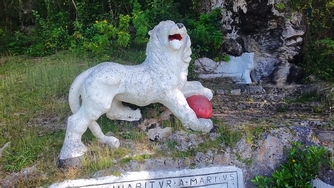
Lion Statue at Gun Hill barbados
Discover a historic 1868 lion statue, colonial-era signal station, and sweeping vistas.
Our drone flight begins at the base of Gun Hill, where history itself seems carved into the landscape.
As we approach the iconic lion statue, we focus in on the Latin inscription that tells us this impressive sculpture dates back to 1868. It was carved from a single piece of limestone by Captain Henry Wilkinson, who was stationed here at the time.
The inscription reads: “He shall have dominion also from sea to sea, and from the river, unto the ends of the earth”. This is a powerful proclamation reflecting the might of the British Empire during an era when Barbados was one of its far-flung colonies.
The lion rests one massive paw on a red globe, another symbol of that colonial dominance spanning the world. Behind the statue, a thoughtful bench is carved right into the cliff face, inviting visitors to pause and take in the view.
Flying slowly upward, we appreciate the extraordinary scale and intricate detail of the sculpture, a remarkable feat of 19th-century craftsmanship.
Rising higher, the Signal Station itself comes into focus, nestled within lush surrounding forest. This was once a vital hub where stationed soldiers kept vigilant watch for vessels approaching the island, distinguishing friend from foe. Using signals and semaphores, they relayed crucial information across the island: news of arriving ships, announcements of meetings of the Council of Barbados, and reports of unrest on the plantations.
Panning around, we can see why this elevated location was so strategically valuable. The magnificent vistas of the land below and sea beyond were essential for soldiers in the 1800s, and remain equally rewarding for visitors exploring the site today!
We make a final graceful pass by the lion, completing this short but fascinating journey through Barbados’ colonial heritage.
Video created by: lion statue at gun hill
Reviewed by: kathy lynn ward